What happens
Aínsa’s Plaza Mayor becomes the setting for a community drama with kings, soldiers, allegorical figures and the appearance of a miraculous cross above a carrasca, or holm oak. La Morisma tells a legendary eighth-century struggle associated with Garci Ximenez. It is staged local theatre, and the legend should not be treated as a verified account of an actual battle.
The last council-authored programme confirmed a performance at 10.30pm on 29 August 2026. The event is biennial, with no next date verified here. Older general descriptions saying September or naming a customary Sunday must not replace the specific 2026 programme or be used to calculate a future show.
Following the story
The association’s character guide includes the opposing kings and their entourages, ambassadors, an angel, the devil, sin, a shepherd and the rapatán. Historical-looking costumes share the square with openly allegorical figures. Recognising that mixture helps a visitor understand why this is a theatrical account of community legend rather than a literal military demonstration.
The cross in the oak is the narrative turning point: in the story it encourages the Christian army. If you do not follow all the spoken text, read the association’s outline beforehand and watch the relationships between the groups. The movement of the crowd within the performance and the use of the surrounding architecture give the drama much of its character.
The community behind the play
The organiser describes people from Aínsa and the surrounding comarca working as performers and contributing to costumes, scenery and the event’s organisation. That shared labour is one of the most useful things to look for. The square is familiar town space transformed through rehearsal and cooperation.
The association’s account also records a revival in 1970 after a long interruption. Its historical material discusses the gathering and adaptation of the text, showing that the performance has a history of recovery and change. That is a stronger explanation of its survival than an unsupported claim that every word and scene has remained identical since the legendary century in which the story is set.
Can I take part?
Plan to attend as an audience member. The association’s local cast and production work are organised in advance, and the programme does not establish a visitor role that can be joined on the night. If you are interested in helping, contact the association well before an announced edition and ask about a specific opportunity.
The 2026 play required a ticket and had limited capacity. The square was closed and reopened for audience access before the performance; it was not unrestricted viewing just because the location is normally public. No next-edition price or sales timetable has been verified. Follow the organiser’s authorised ticket information once released, and check the exact seat or standing arrangement before buying.
An evening in a working square
The historical 2026 notice separated the closure of Plaza Mayor, audience admission and the 10.30pm performance. Those stages help explain why arriving at the square at the last possible minute is a poor plan, even when you already know its location. Use the next programme for actual entry times and meeting arrangements.
The wider weekend has included a market and other activities, but admission to one does not establish admission to the play. This guide focuses on the human community drama. Read the current schedule in terms of the particular performance you want, allowing time for a meal, the entrance procedure and a late finish before choosing a return journey.
Where to stay
Aínsa is the useful event base because the show is late and the historic centre is worth exploring outside performance hours. The municipal directory identifies real accommodation in the old town, including Apartamentos Casa Rivera and Albergue Mora de Nuei. It also lists properties in the newer riverside area, such as Mesón de L’Ainsa. Compare their addresses and routes rather than assuming all Aínsa rooms sit beside the stage.
Ask about late-night entry, the approach from the performance and any festival vehicle restrictions. A room overlooking Plaza Mayor may have a different noise and access situation from one elsewhere; confirm it with the host. Staying farther away in Sobrarbe adds a final journey after the drama, which should be arranged before buying a ticket dependent on it.
Practical bits
Getting there from the UK
Compare a flight to Zaragoza with alternatives involving a larger Spanish airport and onward rail. Aena’s current Zaragoza information identifies bus 505 with a Delicias intermodal stop. Renfe’s Aínsa visitor information uses Huesca as a rail gateway, followed by a road stage; there is no train delivering you to Plaza Mayor.
For a public-transport plan, examine the regional network and the dated connection into Aínsa, including any change through another hub. The Aragón map includes an Aínsa–Sabiñánigo corridor, but a map alone does not establish a useful performance-night service. A transfer or hire car is another option. Once in Aínsa, plan the approach to the old town and agree where a driver can collect you without relying on access through a closed square.
Access and families
The plot can be enjoyed visually, but there is a late start, spoken dramatic text and a performance long enough to require a comfortable viewing arrangement. For a family, decide whether a particular child will enjoy the whole evening and check the ticket and seating rules. A daytime market or workshop in the wider programme is a separate experience.
The regional heritage guide describes the old town’s cobbled streets. Ask about the route from your drop-off point to the actual audience entrance, as well as seating, adapted toilets and any steps inside the temporary arrangement. No next-edition access plan has been verified. An old-town accommodation address or a general town accessibility claim cannot settle those performance-specific questions.
Plan your trip
Stay the night
We earn a commission if you book through these links, at no extra cost to you.
Search places to stay in and around Aínsa. Wait for La Morisma’s next date before adding dates to this search.
Find a place to stay on Booking.com (affiliate link)Plan the journey to Aínsa
Zaragoza is one airport gateway to compare from the UK. Its airport bus 505 serves Delicias; Renfe identifies Huesca as a gateway towards Aínsa, which then needs road transport. Arrange the late return to your room after the performance rather than relying on a daytime regional connection.
Booking.com links are affiliate links. What that means.
Where it is
Approximate town/area marker for Aínsa. Not a verified event entrance, viewing place or complete course.
The map pin for La Morisma marks an approximate area. Open in OpenStreetMap
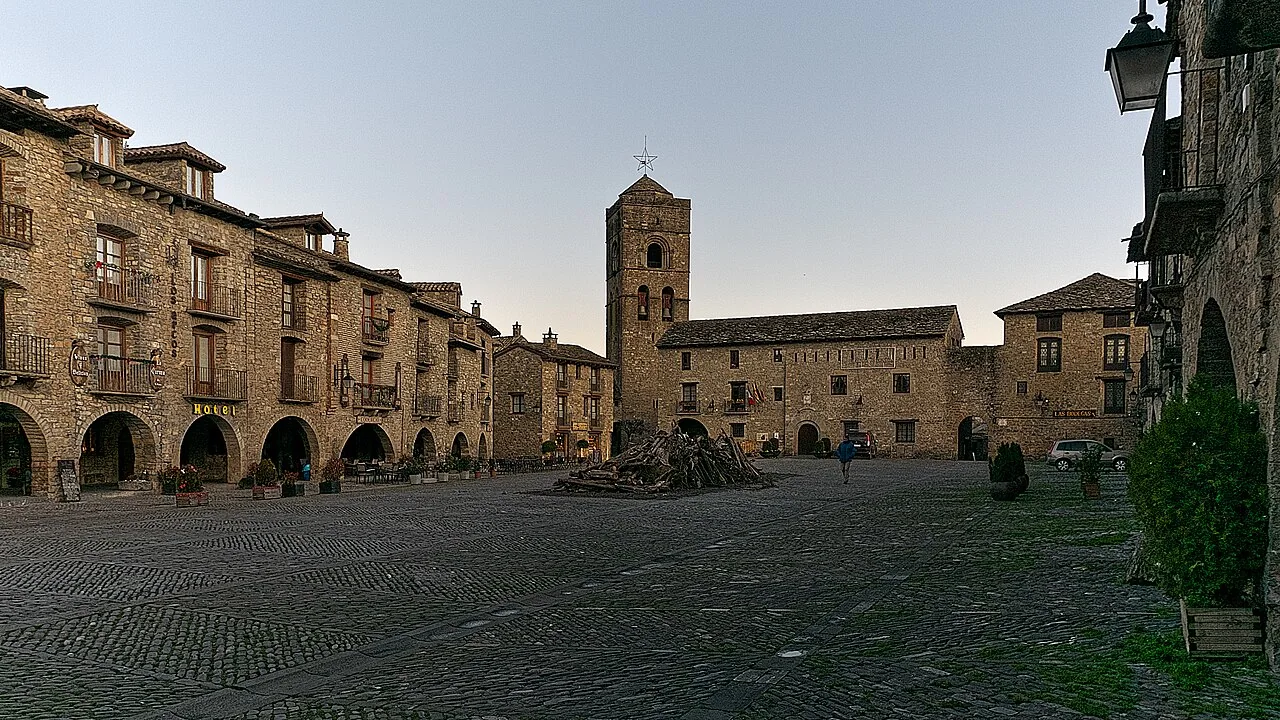
Photos: Jl FilpoC via Wikimedia Commons (resized). Licences and links on our photo credits page.
Stay on: the day before and after
Use the preceding day to explore Plaza Mayor and the Santa María church area before event barriers change the way you move through them. Aragón tourism identifies the castle enclosure and the Romanesque church and cloister as principal heritage visits. Check the interiors’ opening independently; a theatre ticket does not include them.
For the following day, the Sobrarbe geopark’s Aínsa itinerary offers a way to study the stones and landscape around the town, with the Ara and Cinca confluence providing a different perspective from the stage. Choose the manageable section and current route conditions that fit your group. A major Pyrenean hike is a separate undertaking, so a restful local day can be a better complement to a late community performance.
Odd things nearby
- Descenso de Nabatas del Cinca 6 miles away, May
- Brandon de la Saint-Jean 35 miles away, Around the June summer-fire season; next date unannounced
- Diada dels Raiers de la Noguera Pallaresa 44 miles away, Early July
Also in August
- Corso de la Lavande Digne-les-Bains, France
- Kubb World Championship in Rone Rone, Gotland, Sweden
- Guča Trumpet Festival Guča, Serbia
- Meyboom Brussels Brussels, Belgium
About this guide
For La Morisma, check before you go. For La Morisma, checked 16 November 2026. The 10.30pm performance, limited capacity and ticket requirements are historical 2026 details. Do not calculate a future date or replace the specific August programme with older September rules. Research scope is the community play; accompanying market and cavalry or animal exhibitions are excluded from this event profile.
About the date. Council-authored programme confirms 29 August 2026 at 22:30 in Plaza Mayor with paid limited-capacity entry. Townspeople enact the legendary eighth-century battle and miraculous cross in a tree; describe it as legend and community theatre. Biennial performance is the subject, excluding the accompanying market and animal/cavalry exhibitions. No calculated future date.
For La Morisma, researched from the sources below and last checked on . For La Morisma, we haven’t visited every event or tested every journey, and the organiser’s own information always wins.
- Council-authored programme: 29 August 2026, tickets and controlled access
- La Morisma association: biennial community drama
- Association: characters and legendary story
- Association: recovery of the performance in 1970
- Association: history and transmission of the text
- Aínsa municipal directory: Casa Rivera in the old town
- Aínsa municipal directory: Mora de Nuei
- Aínsa municipal directory: riverside Mesón de L’Ainsa
- Aragón tourism: town, church and castle
- Aragón tourism: old-town stone streets and architecture
- Sobrarbe geopark: Aínsa itinerary
- Aragón: regional bus network
- Renfe: Huesca gateway for Aínsa
- Aena: Zaragoza airport bus 505
Have we got something wrong about La Morisma? Report an issue with La Morisma.